By Ben Altomari, Director of Program Delivery
The transition to building electrification is accelerating, driven by ambitious decarbonization goals, expanding incentive funding and increasing customer demand for high-efficiency technologies. Yet for low- and moderate-income (LMI) households, successful electrification requires far more than installing a heat pump or upgrading an electrical panel.
The organizations achieving the greatest success recognize that electrification is not a single service but a coordinated sequence of technical evaluations, skilled trades, customer support, quality assurance and project management. Every step must work together to create a safe, efficient and seamless customer experience.

Comprehensive Assessments

Heat pumps perform best when they are installed in homes that have been properly evaluated for energy performance. Standardized assessments should consistently examine:
- Building envelope performance
- Existing HVAC equipment
- Ductwork condition and performance
- Insulation and air sealing opportunities
- Moisture and ventilation concerns
- Combustion safety
- Existing electrical infrastructure
- Household load calculations
Rather than treating electrification as a standalone equipment replacement, we evaluate the interactions between systems to determine the safest and most effective path forward. Capturing electrical capacity at this first visit – not at install – lets us sequence the work rather than react to it.
Electrical Readiness: The Foundation for Electrification
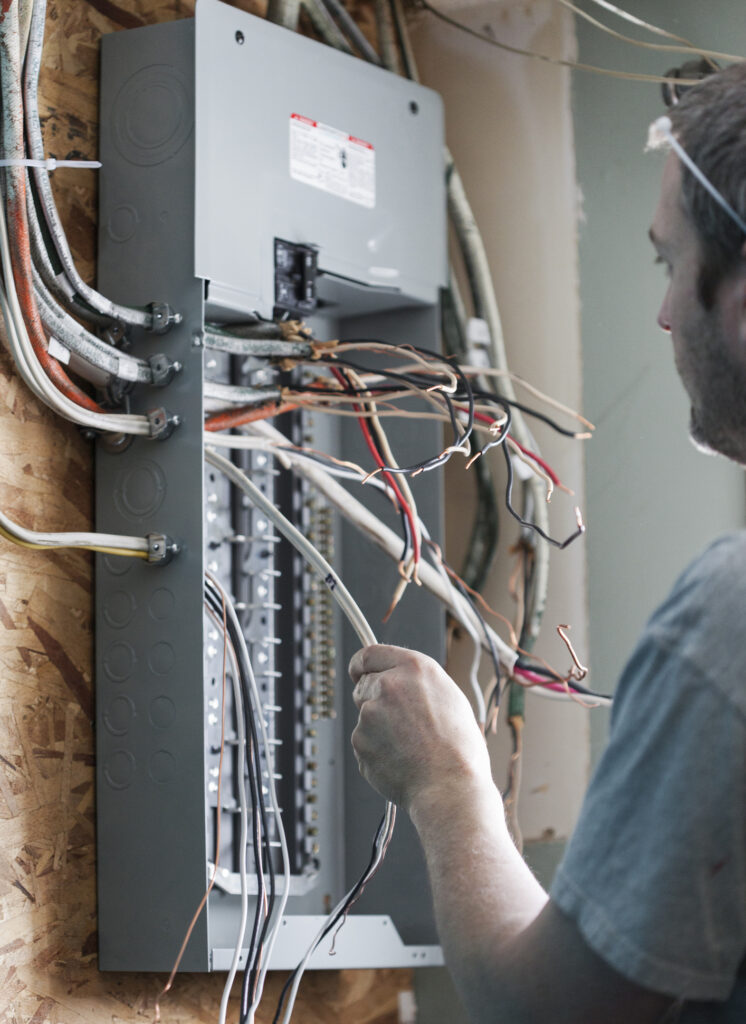
Before new electric equipment can be installed, we determine whether the home’s electrical service can safely support additional load. This evaluation extends beyond identifying whether a panel upgrade is needed to the full electrical ecosystem.
Safety is a discipline managed at each step, not a byproduct of a good installation. Before new equipment is energized, load calculations confirm the service can carry it without overloading circuits. During a gas-to-electric transition, combustion safety testing guards against carbon monoxide risk and any abandoned gas lines are properly decommissioned. Aging or unsafe wiring is identified and addressed rather than built over. Permitting and inspections are treated as the safety backstop they exist to be, not a scheduling nuisance to work around.
Not every project will require a complete panel upgrade. In some cases, smart load management or targeted electrical modifications may provide a more cost-effective solution while maintaining safety and performance.
Clearly defined workflows and communication protocols are needed to coordinate with utilities and permitting agencies to manage meter disconnects, service upgrades, inspections, and reconnect scheduling to avoid project bottlenecks. And where a home carries a pre-electrification barrier such as knob-and-tube wiring, moisture issues or unsafe combustion appliances, a funded remediation path turns it into a sequenced work order rather than a dead end. Programs without that path do not avoid those homes – they accumulate them, and the pipeline quietly narrows.
Coordinating Multiple Trades into One Customer Experience

Unlike traditional efficiency measures, electrification projects involve multiple disciplines working in sequence – home energy assessment, air sealing, insulation, electrical and panel work, heat pump installation, quality assurance inspection, and customer education. Each step depends on the one before it, and the handoff between trades is where schedules fail. Delays in permitting, electrical work or weatherization cascade through every subsequent milestone.
Program success ultimately depends on the workforce delivering that sequence – and on who is accountable for holding it together. For panel and service upgrades, qualified licensed partners manage the electrical scope, while sequencing, permitting, and utility service coordination stay with a partner like CMC. That gives the utility one accountable party and gives trade partners clean, well-scoped work rather than jobs that stall between trades.
Organizations that consistently deliver manage these projects through integrated workflows rather than disconnected departments. Shared scheduling, centralized project management, and automated task sequencing keep contractors, inspectors, utilities, and customers aligned across the project lifecycle, producing fewer delays, better communication and a smoother customer experience.
Quality Assurance that Extends Beyond Installation
Successful electrification requires quality assurance at every stage of the project, not just after final installation. Embedding quality assurance throughout the customer journey ensures technical performance, safety and installation quality are verified.
Verification also must answer the question the household cares about most: did the bill go down? Electrification does not automatically lower costs for an income-constrained home. Where the shell is leaky and under-insulated, or backup heat controls are misconfigured, a family can end up worse off financially. Confirming a control strategy at commissioning and pairing equipment with envelope work is what turns the intended outcome into the outcome delivered.
High-performing organizations also use quality assurance data like callback rates, inspection findings, warranty claims and customer feedback to identify trends, improve contractor performance and continuously strengthen program delivery.

Electrification Success Depends on the System Behind the Work
As utilities and program administrators expand investments in electrification, operational capability is becoming just as important as technical expertise. Successful LMI electrification is not defined by the number of heat pumps installed. It is defined by the strength of the operational systems that make every installation possible.
About the Author

A dedicated leader with 15 years of progressive experience at CMC, Ben Altomari has held key positions in field operations, quality assurance, and program management. He was instrumental in the design and implementation of the company’s first comprehensive in-house weatherization department and C&I Direct Install program. Most recently, as Senior Program Manager, he oversaw a $30 million annual operation supporting low- to moderate-income residential energy-efficiency programs on behalf of multiple utility clients.
Ben is recognized for his expertise in program design, P&L management, budget development, and cross-functional collaboration. He is skilled at analyzing complex operational challenges and implementing process improvements that enhance program performance, quality, and client outcomes. His ability to translate data and operational insights into practical solutions has helped drive improvements across multiple energy efficiency initiatives.