By John White, Program Support Manager
Heat pumps can play an important role in improving home comfort, managing energy use, and reducing reliance on fossil fuels. But for many households, the decision to replace a heating system does not happen during a planned home improvement project.
It happens when their furnace or boiler stops working.
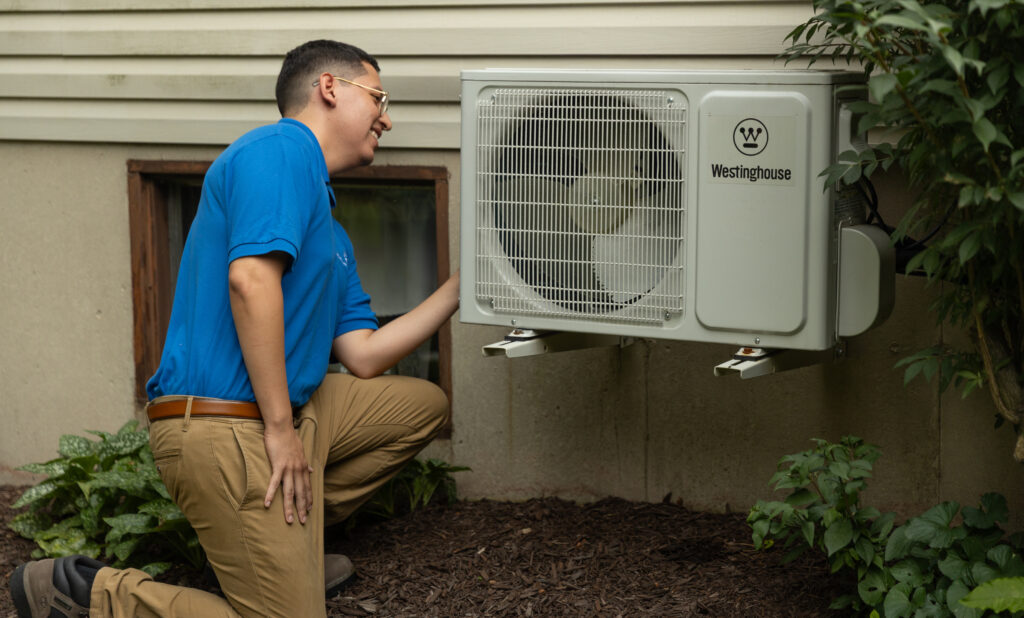
When a heating system fails, customers need a solution quickly. They may suddenly face many choices including weatherization needs, electrical upgrades, ductwork, equipment selection, financing, and incentives – all while trying to decide how to heat their home.
When those needs become a series of separate costs, decisions, and contractors, the path to a heat pump can quickly become a wall. Every additional step creates another opportunity for customers to feel overwhelmed or drop out.
The challenge for utility programs is not simply making heat pumps available. It is making the path to a heat pump practical – before and when the customer needs it.
That means approaching heat-pump readiness as a coordinated customer pathway: identifying needs and resources in advance, prioritizing what should happen first, and giving customers clear next steps when they are ready to act.
A well-designed pathway can make the transition more manageable and affordable while helping homes become ready for a properly sized and appropriately designed system. It can also help programs anticipate where customers are most likely to drop off and put support in place to keep them moving forward.
Here are six steps to consider.
1. Start before the heating system fails

The best time to prepare a home for a heat pump is before the existing system fails. Energy assessments, weatherization, electrical upgrades, duct improvements, and other customer touchpoints can introduce customers to heat pumps and identify needs while there’s time to address them without pressure. The goal is to move as much decision-making as possible out of the emergency moment.
2. Make the initial visit count

Shift toward a more comprehensive first assessment that captures as much information as possible about the home’s heating and cooling loads, building envelope, and electrical capacity. While some homes may still require a separate electrical assessment or additional information to complete the load calculation, gathering more upfront can minimize follow-up visits, reduce customer drop-off, and support accurate system sizing from the start.
3. Connect the right resources

The cost of preparing a home for a heat pump can quickly become a barrier. Programs can help by creating clear customer pathways supported by available resources, which may include IRA-related funding, federal and state programs, utility incentives, financing, and other assistance, depending on eligibility and program availability, to meet different customer needs.
Utilities can also give customers tools to understand the financial implications of their choices. A calculator, for example, could help customers estimate potential costs under different scenarios, such as replacing their existing heating system, making home improvements first, or installing a heat pump, and show how available incentives could affect the overall investment.
Centralizing information and connecting the pieces can help customers develop a plan by answering: What does this home need? Which resources can help? Who provides each service? What does the customer do next? When those answers are clear, customers have fewer opportunities to get lost.
4. Sequence the envelope before the equipment

Air sealing and insulation lower the heating load, so you may be able to install a smaller system with less reliance on backup heat. Programs that reward or require weatherization ahead of sizing get better outcomes than programs that treat them as parallel tracks. The sequence isn’t a nice-to-have; it keeps the system from being oversized and bills from creeping up.
5. Size and design the system for the home

Once you understand the home’s condition and any planned improvements are complete, you can properly size and design the heat pump based on the home’s actual heating and cooling needs.
A room-by-room load calculation and appropriate equipment selection methodology will provide a stronger foundation than simply replacing an existing furnace or air conditioner with a similarly sized system or sizing based on square footage. But proper sizing is only part of the equation. Checking cold-weather heating capacity, ductwork airflow and ventilation to ensure the system meets the home’s needs in real-world conditions, and verify proper operation after installation to deliver the comfort, performance, safety, and efficiency customers expect.
6. Treat customer education as a deliverable, not a leave-behind

Heat pumps can operate differently from conventional heating and cooling systems and customers need to understand what to expect, the required maintenance, how to use their controls, and how their behavior can affect energy use and bills.
Customers need to be prepped just as much as the home does.
When customers understand how their system works and what normal operation looks like, they are better prepared to use their heat pump as intended and recognize when something may actually require attention.
Shifting a series of transactions to a customer pathway
Preparing a home for a heat pump can involve multiple organizations, funding sources, technologies, and decisions. That complexity is unlikely to disappear – and it does not need to.
What can change is how the customer experiences that complexity.
A customer may need weatherization before a system can perform as intended. An electrician may need to address electrical requirements. A contractor needs accurate information to size and select equipment. A customer may need financial assistance to make the project affordable. And that customer needs to understand how to operate the system once it is installed.
These pieces do not have to come from the same provider. Different organizations may be best positioned to provide weatherization, electrical work, HVAC services, or financing.
But, they do need to connect.
A coordinated pathway can help programs identify needs earlier, prioritize improvements, braid available resources, provide education, and create smoother handoffs between the organizations delivering each part of the solution.
Most importantly, it can help keep a customer from reaching a point where the path to a heat pump feels like too much to take on.
When programs make the pathway easier to understand and navigate, they are doing more than helping customers install new equipment. They remove the barriers that can keep customers from reaching the finish line.
About the Author